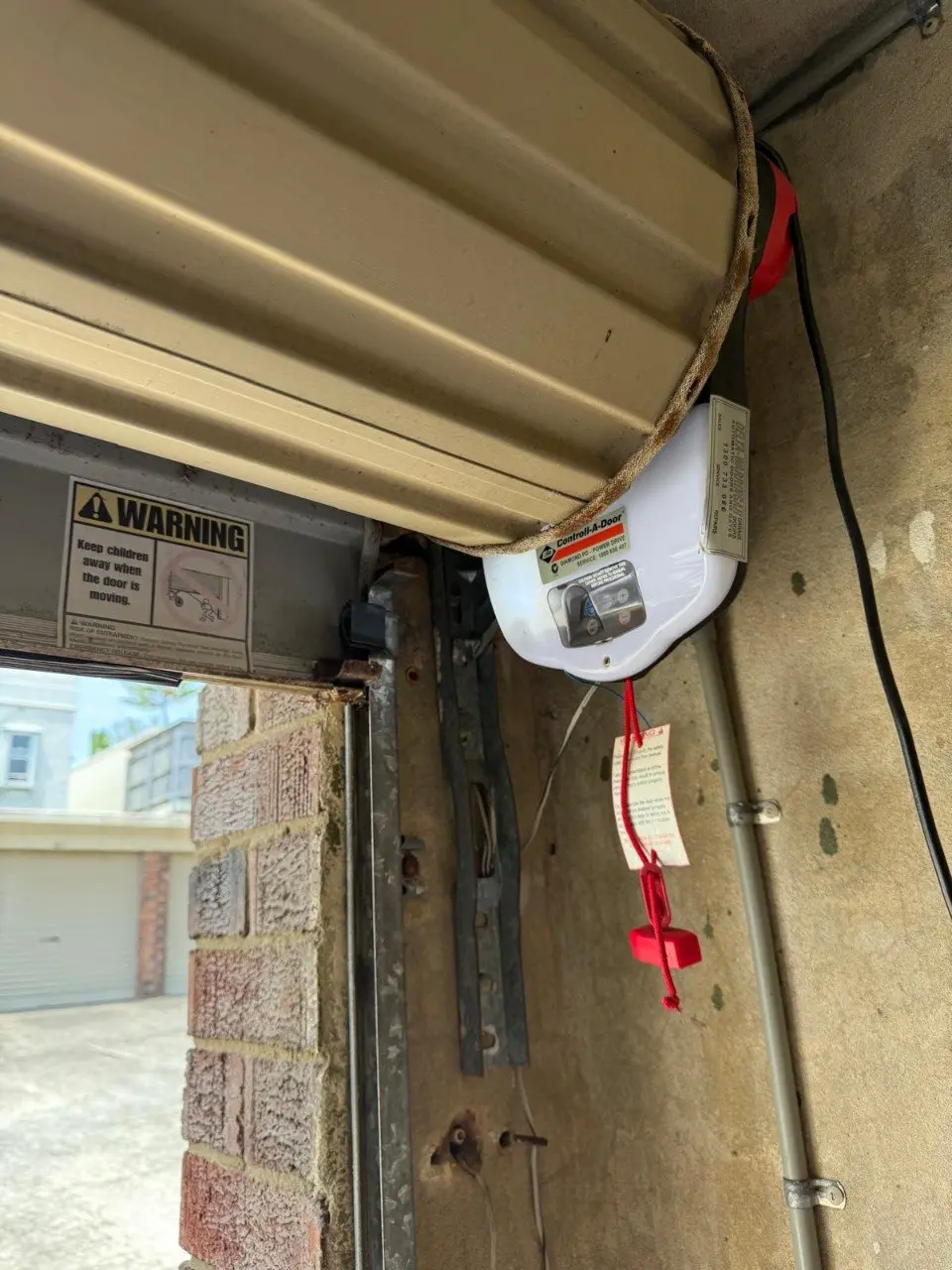
Step 1: Check Power and Emergency Manual Disconnect
Begin by checking if your automatic opener is receiving mains electricity. Look for the power LED light on the overhead motor unit. If completely dark, verify that the ceiling power outlet is switched on and that a safety switch (RCD) has not tripped in your home’s main electrical sub-board. Next, inspect the red emergency manual release cord dangling from the opener trolley. If someone has pulled this cord, the motor is mechanically disconnected from the door carriage. To re-engage, pull the emergency handle backward toward the motor unit until the spring-loaded pin clicks back into the trolley carrier.
Step 2: Inspect Safety Reverse Photoelectric Sensors
Modern automatic garage doors in New South Wales are fitted with photoelectric safety reverse beams positioned 100mm to 150mm above floor level on either side of the door opening. If the invisible infrared beam is interrupted, the opener will refuse to close or will open a few inches and immediately reverse, flashing its courtesy light. Check that leaves, spider webs, garden tools, or children’s toys are not blocking the beam line. Wipe the optical glass lenses with a soft, dry microfibre cloth and ensure both emitter and receiver indicator LEDs glow steadily rather than flickering.
Step 3: Check for a Snapped Torsion Spring (High Hazard)
Look above the closed door at the steel horizontal torsion bar running across the lintel. You should see one or two heavy wound steel springs. If you see a distinct 50mm to 75mm gap where the spring coils have fractured, the spring has snapped. When a torsion spring breaks, the counterbalancing kinetic energy is gone; the door now weighs between 80kg and 160kg of dead weight. Your opener motor is engineered to apply 600N to 1200N of dynamic guidance, not to lift dead steel.
Step 4: Check Track Channels and Rollers for Mechanical Jams
Inspect the vertical and curved horizontal steel track channels on both sides of the door. Are all nylon or steel roller wheels resting inside the track lips? Has a roller popped out of position, or is there a noticeable dent or kink in the track channel? In leafy suburbs like Wahroonga, small stones, gum nuts, or fallen branches can become wedged in the track curve, causing the motor’s obstacle detection circuitry to shut down immediately.
Frequently Asked Questions
Why does my opener click and hum, but the door doesn’t move?
This almost always indicates a stripped nylon internal drive gear or a broken counterbalance spring. The motor armature is spinning, but mechanical drive cannot transfer to the door.
Can I open my garage door manually during a storm power blackout?
Yes, provided the counterbalancing springs are intact. Pull the red emergency disconnect cord firmly downwards and backwards. You should then be able to lift the door smoothly with one hand.
Need Professional Trade Assistance?
Garage Door Repairs
When your garage door binds, refuses to open, or makes alarming noises, our mobile technicians provide rapid d...
Garage Door Motor Repairs
When your garage door motor hums without moving, jerks abruptly, or fails to respond to remotes, our factory-t...
Garage Door Spring Repairs
A snapped garage door spring leaves your door trapped shut and poses serious safety risks. We carry high-cycle...