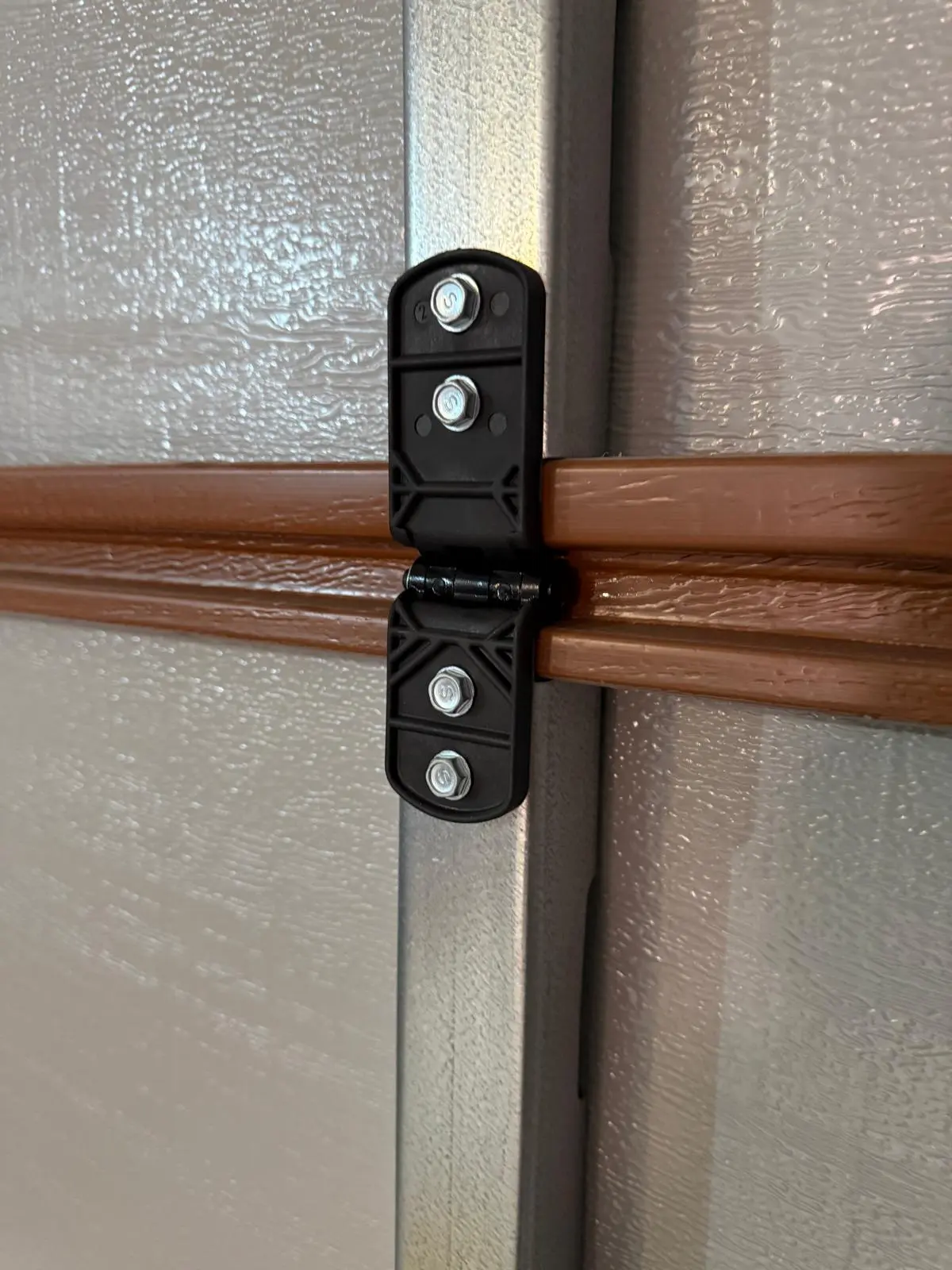
Task 1: The 10-Second Visual Hardware Audit
With the garage door closed and the interior lights on, carefully inspect all visible moving components. Look for frayed, kinked, or rusted steel lifting cables near the bottom corner brackets. Check the torsion spring coils above the door for rust scale or uneven gaps between windings. Examine the nylon and metal rollers: are any wheel heads cracked, tilted, or wobbling loose on their stems? Check that all hinge bolts fastening hardware to door panels are snug and firm.
Task 2: The Semi-Annual Manual Balance Test
A garage door should be balanced so that its weight is completely neutralised by the springs. Pull the emergency disconnect cord with the door fully closed to decouple the electric motor. Manually lift the door using the bottom lift handle. The door should glide smoothly with minimal physical effort (less than 5kg of lifting force). Stop lifting when the door reaches waist height (about 1 metre from the floor) and release your hands. The door should hold its position without sliding down or shooting up. If it falls heavily, the springs are under-tensioned and need professional re-balancing.
Task 3: Correct Lubrication Protocol (What to Use & What to Avoid)
Proper lubrication eliminates up to 80% of operational garage door noise and protects against moisture corrosion. Apply a high-quality non-drip silicone lubricant or white lithium grease spray to all steel roller bearings, hinge pivot pins, and the full length of the torsion spring coils. Wipe away excess spray with a rag. Never spray lubricant inside the vertical track channels. Oil inside tracks collects road dirt, dust, and sawdust, creating a gummy paste that causes track rollers to slide and wear flat spots rather than rolling smoothly.
Task 4: Mandatory Auto-Reverse Safety Sensitivity Test
Australian safety standard AS/NZS 60335 requires that all automated garage doors detect obstructions and reverse immediately. Place a solid piece of timber (such as a 2x4 block laid flat, approximately 50mm high) on the garage floor directly in the door’s closing path. Use your remote to close the door. When the bottom rubber seal makes contact with the timber block, the door must automatically stop and reverse back to the open position within 2 seconds without crushing the timber. If the motor strains, lifts the block, or continues pushing, the closing force margin is set dangerously high and requires immediate recalibration.
Frequently Asked Questions
How often should a professional technician service my garage door?
Homeowners should perform basic visual checks and silicone lubrication every 6 months, while a certified trade technician should complete a comprehensive 28-point mechanical inspection every 12 to 18 months.
Can I tighten the bolts on my torsion spring bracket myself?
No. The centre bearing bracket and end bearing plates support full spring torque. Loosening or adjusting these bolts without de-tensioning the springs can cause catastrophic bracket failure and severe physical injury.
Need Professional Trade Assistance?
Garage Door Repairs
When your garage door binds, refuses to open, or makes alarming noises, our mobile technicians provide rapid d...
Garage Door Roller Replacement
Worn, cracked, or seized track rollers cause your garage door to rattle, squeal, and vibrate through your home...
Garage Door Servicing and Maintenance
Like a motor vehicle, your garage door requires regular professional servicing to remain safe, reliable, and w...