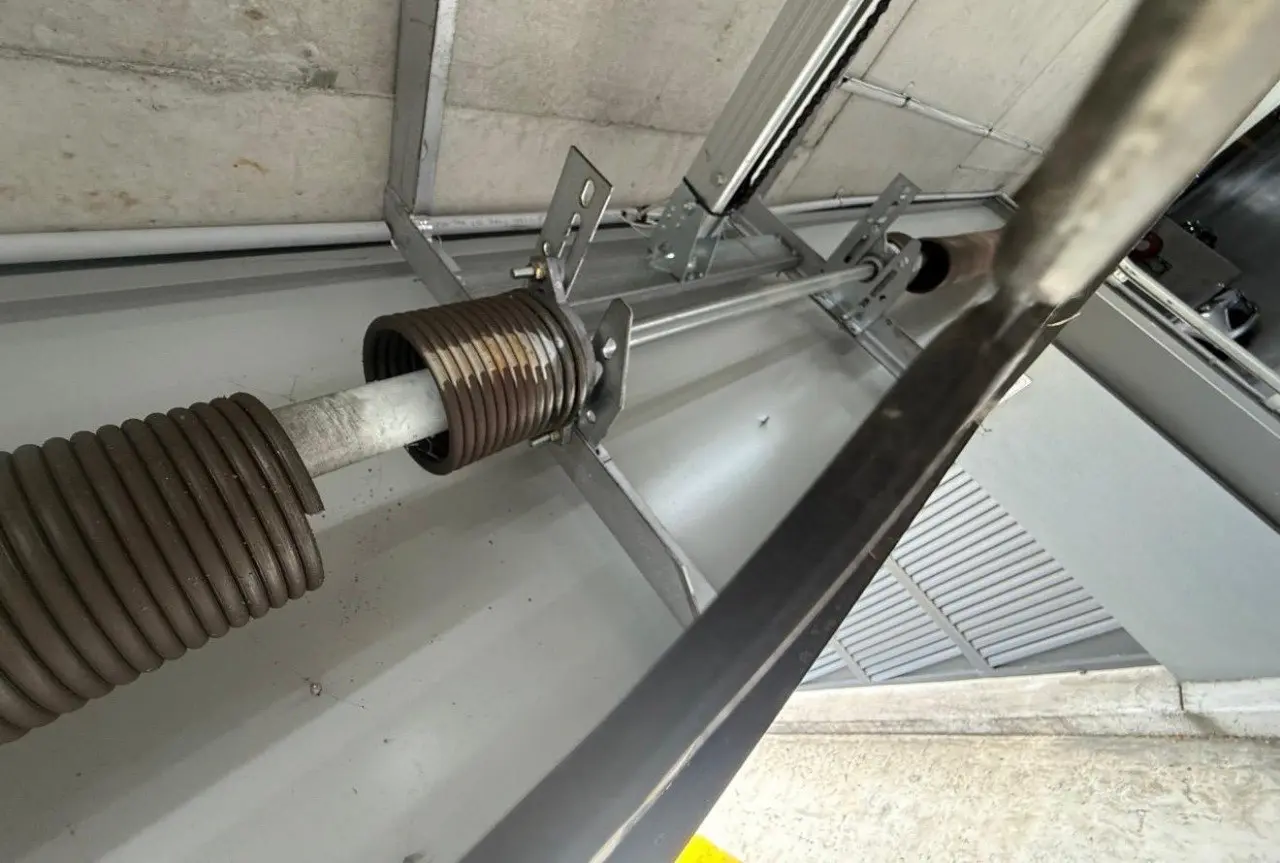
How Garage Door Springs Work & Why They Break
Every time your garage door opens or closes, its springs undergo severe torsional shear stress. Garage door springs do not push or pull; they store rotational kinetic torque when the door is closed and release it as the door ascends. High-grade oil-tempered torsion springs are rated for 10,000 to 20,000 cycles. In a busy household cycling the door 4 times daily, a 10,000-cycle spring reaches the end of its metallurgical fatigue life in approximately 7 years.
| Cycle Rating | Daily Cycles | Expected Lifespan | Best Suited For |
|---|---|---|---|
| Standard (10,000 cycles) | 3 - 4 cycles / day | 7 - 8 years | Single vehicles, modest use |
| High-Cycle (20,000 cycles) | 4 - 6 cycles / day | 12 - 15 years | Busy family homes, double doors |
| Commercial (50,000+ cycles) | 10+ cycles / day | 20+ years | Strata complexes, commercial units |
Realistic Spring Replacement Costs in Sydney (2026 Trade Rates)
Costs for spring replacement in the Sydney metropolitan and Upper North Shore area depend on whether your door has a single torsion spring, twin springs, or internal roller door axle springs. For standard single sectional doors (up to 2.4m wide), replacing a single torsion spring typically costs between $200 and $280. For double-width sectional doors (4.8m to 5.5m wide), replacing a matched pair of heavy-gauge torsion springs with new centre bearings typically ranges between $320 and $420 including labour and balance calibration.
Why You Must Always Replace Springs in Matched Pairs
If your double garage door has two torsion springs and only one has snapped, reputable trade technicians will strongly advise replacing both simultaneously. Both springs were manufactured from the same steel batch, installed on the same day, and have performed the exact same number of operational cycles. The remaining unbroken spring has suffered identical microscopic metal fatigue and will almost certainly snap within 4 to 8 weeks, requiring another service call and call-out charge.
The Grave Dangers of DIY Spring Replacement
Garage door springs operate under hundreds of kilograms of stored mechanical force. To install a torsion spring, a technician must insert solid steel winding bars into the winding cone and manually wind the spring dozens of full revolutions. If a homeowner attempts this using ill-fitting screwdrivers or adjustable wrenches, the tool can slip out under tension, fracturing fingers, shattering wrists, or inflicting severe facial trauma. Always leave spring winding to qualified trade specialists with certified winding bars.
Frequently Asked Questions
How can I tell if my garage door springs are losing tension before they snap?
Perform a balance test: disconnect the opener via the emergency release cord and manually lift the door to waist height (approximately 1 metre). Let go of the door. A properly balanced door will remain floating stationary. If the door drops heavily to the floor, the springs have lost tension.
Can I spray WD-40 on my garage door springs to stop squeaking?
No. Standard WD-40 is a solvent and degreaser that strips factory protective oils. Instead, spray a dedicated non-drip silicone or heavy-duty motor oil sparingly across the coils, then cycle the door twice.
Need Professional Trade Assistance?
Garage Door Repairs
When your garage door binds, refuses to open, or makes alarming noises, our mobile technicians provide rapid d...
Garage Door Spring Repairs
A snapped garage door spring leaves your door trapped shut and poses serious safety risks. We carry high-cycle...
Garage Door Cable Repairs
Frayed, tangled, or snapped lifting cables leave your garage door hanging dangerously off-kilter or completely...